
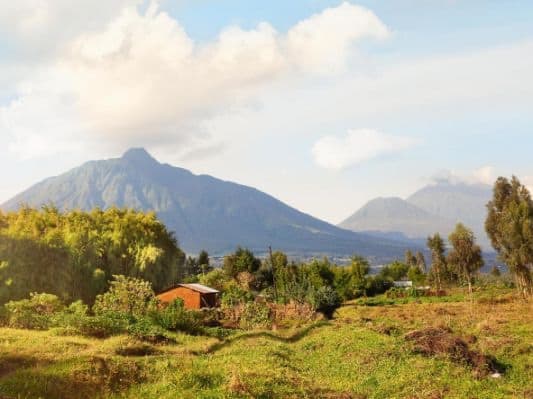
Know Before You Go: How to Hike Mount Nyiragongo, an Active Volcano
How to Hike Mount Nyiragongo, an Active Volcano. Yes, you can actually camp next to an active volcano in the Democratic Republic of Congo. Intrepid travellers recognise Mount Nyiragongo as one of East Africa’s greatest adventures; specifically, they prize this active volcano in the Democratic Republic of Congo for its world-class lava lake.
Hikers can purchase permits through the Virunga Park service, and spend the day trekking through a multitude of ecosystems–get ready for shady forests, slippery lava rocks, and stark inclines, as well as an unreal view of neighbouring Rwanda–before spending the night next to the red glow of the world’s largest lava lake.
 1: Getting There
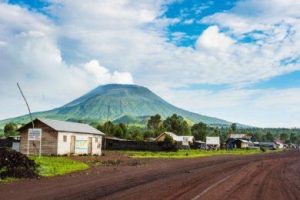
Mount Nyiragongo is approximately an hour outside of Goma in the Democratic Republic of Congo. Goma shares a border with Gisenyi, a lakeside town in Rwanda.
Many tourists to the region fly into Kigali, spending several days in Rwanda’s capital city or trekking for gorillas in Volcanoes National Park before driving to Gisenyi.
It is possible to spend the night in either Gisenyi or Goma before hiking Nyiragongo, though Gisenyi is a bit more idyllic and quiet.
2: Booking Your Trip
Book your trip through the Virunga Park service website. The site is incredibly straightforward, offering a variety of different options, including transport, food packages, and even gear rentals. Park rangers lead the hike up Mount Nyiragongo, and private trips (except in extremely special circumstances) are impossible to arrange.
Booking this adventure through a tour company isn’t necessary unless it would make you more comfortable and is part of an extended vacation package.
 3: Packing
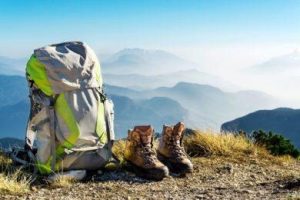
While the morning portion of the hike might feel warm, the evening on Mount Nyiragongo will almost certainly be frigid. Consequently, you should bring extra cold-weather layers, including hats, scarves, and gloves, even if you rent gear from the Park service. Furthermore, these items will help you fend off the howling winds and freezing temperatures at the summit.
Pack additional snacks and a reliable camera for your journey; you will stay energised and capture every spectacular moment. You do not need to bring tents, as permanent cabins dot the rim of the volcano. Furthermore, you can hire porters at the base of the hike to carry your heavy packs up the mountain.
4: Monitor the News
Political protests have recently rocked Goma due to the lack of an upcoming presidential election; consequently, you should check current news outlets before your arrival to monitor both political and volcanic “eruptions.” While tourists generally remain safe, the city is currently under the de facto control of M23 rebels. Furthermore, although Mount Nyiragongo’s last major eruption occurred in May 2021 (not 2002), scientists continually monitor its volcanic activity.
 5: Mental Preparedness
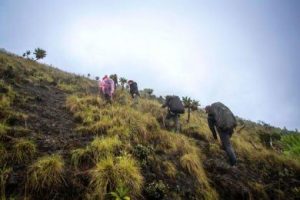
This hike is hard. Really, really hard. It begins at a steady pace through a shaded forest before hitting treacherous paths filled with slippery lava rocks. It can take between four and seven hours, depending on your group’s abilities, and the last 40 minutes feature an exceptionally steep incline.
Unfortunately, it’s rare for the entire hiking group to reach the summit. This trip definitely requires trekkers in good physical shape, as well as those of serious mental toughness. Start the hike confident, and you’ll do just fine.
6: Don’t Forget the Altitude
Mount Nyiragongo clocks in at 3,470 meters (11,385 feet). Though this might not seem very high, hikers can ascend in a single day, and altitude sickness is fairly common at the summit. Consider taking Diamox or another altitude medication for a better experience, and make sure to hydrate and have Advil on hand.
 7: Purchase or Bring Walking Sticks
Hand-carved walking sticks will save your life on this trip; specifically, local community members sell a wide selection at the base of the hike. These sticks make a huge difference during both the ascent and descent, especially when you scramble over loose rocks. Furthermore, although the hike forced my knees to protest, they felt very grateful for the extra support on the way down.
8: Moderate Your Expectations
Unfortunately, Mother Nature is unpredictable, and many hikers have turned away from Mount Nyiragongo, disappointed with the lack of lava lake views. On our hike, visitors just the day before could barely see the red lava, whereas the volcano was entirely clear for our journey. Keep in mind that you cannot guarantee these views; unfortunately, you must rely on a bit of luck to see them clearly.
9: Don’t Lean Over
No, really. All of the Park rangers told gruesome stories of tourists plummeting to their deaths trying to get a closer glimpse of the mesmerising lava lake. Instead, keep a safe distance and follow the Ranger’s instructions carefully. Enjoy Mount Nyiragongo from a safe distance, while still allowing you to take photographs and bask in the red volcanic glow.
 10: Get Ready for One of the World’s Most Impressive Views
After hours of hiking a steep incline, the small metal cabins at the edge of the volcano are a welcome sight. The rangers will encourage you to quickly put your bags down in the assigned cabins before making your way to the volcano’s edge.
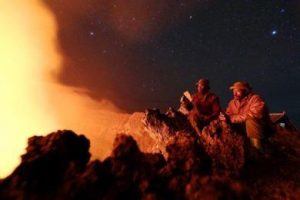
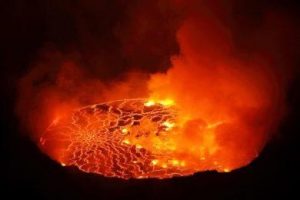
There, nothing can really prepare you to see the bubbling surface of Mount Nyiragongo’s lava lake. The lava consumes itself, twisting and churning in a vaguely macabre dance. It’s beautiful, terrifying, and beyond evocative. I’ve never seen anything like it before, and I’m already plotting my way back to hike Mount Nyiragongo again.