
Brief Insight into Uganda’s 10 National Parks
An overview of Uganda’s 10 National Parks. Uganda has over 10 national parks with a variety of Wildlife habitats, from snow-capped mountains, papyrus swamps, and thick tropical forests to open savannah plains. From the lush forests to the vast savannah plains, these regions shelter a diverse range of wildlife. For instance, more than 1,047 bird species and primates such as gorillas and chimpanzees inhabit the wooded areas. Visitors can also find classic game animals roaming throughout the open parks and plains.

Below is a brief Insight into Uganda’s 10 National Parks and some of the animals you should expect to see in Uganda.
1. Lake Mburo National Park.
Lake Mburo National Park is within the Kiruhura District in southwestern Uganda. Spanning 260 square kilometres, it’s an ideal destination for a single-day trip.
The Park also offers great views of buffalo, topi, and large herds of zebras. Birdwatchers can also enjoy a wide variety of species throughout the landscape. Finally, keep an eye out for the impala, as this is the only Park in Uganda where you will find them.
 2. Murchison Falls National Park.
Murchison Falls National Park is in Masindi District in north-western Uganda. As Uganda’s largest national Park, it covers over 3,800 square kilometres and features the Victoria Nile, which bisects the landscape from east to west.
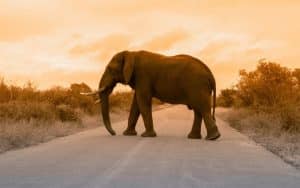
The Park’s identity centres on the Murchison Falls, where the river forces its rushing water through a narrow gorge, creating the world’s most powerful waterfall. As a result, this dramatic natural wonder leaves every visitor in awe. You will also encounter diverse wildlife during your visit, including herds of giraffes, families of elephants, and pods of hippopotamuses. Finally, keep an eye out for lions, leopards, and buffalo as you explore this magnificent wilderness.
3. Queen Elizabeth National Park.
Because of the high number of tourists visiting each year, this has become Uganda’s most visited Park. First, locate this 1,900-square-kilometre landscape in southwestern Uganda. It features diverse terrain, including crater lakes, forested gorges, and the beautiful Kazinga Channel.
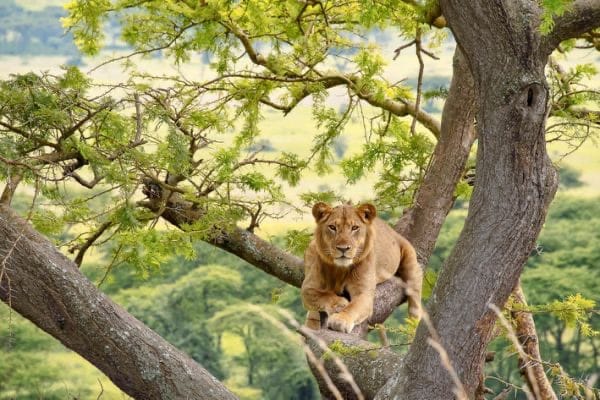
The Park is also famous for its unique tree-climbing lions in the Ishasha region. In addition to these predators, the area hosts the highest number of bird species in the country. As a result, you can enjoy a wide range of activities, such as chimpanzee tracking in Kyambura Gorge or boat safaris.
4. Kidepo Valley National Park.
Head to the Kaabong District in northeastern Uganda to find Kidepo Valley National Park, which covers approximately 1,400 square kilometres. Because of its remote location, the Park is home to big-game favourites such as elephants, giraffes, elands, lions, and hyenas.
You can also see Africa’s largest single herd of buffalo roaming the plains. In addition to these giants, the Park protects animals and birds that you will rarely spot in other regions, such as the cheetah, striped hyena, and ostrich. As a result, this diverse wildlife makes Kidepo one of Africa’s most magnificent wildernesses.
5. Semuliki National Park.
Semuliki National Park is in the Bundibugyo District of western Uganda. Although it covers only 190 square kilometres, it remains one of Africa’s richest areas for flora and fauna. Because the Park hosts over 400 bird species, including the Shining-blue Kingfisher, it has become a haven for birdwatchers.
You can also find various mammals throughout the landscape, such as forest buffaloes, leopards, monkeys, bushbabies, duikers, and elephants. As a result, this diverse ecosystem offers a unique and vibrant wildlife experience for every visitor.
 6. Mt Elgon National Park.
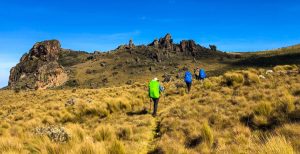
Mount Elgon National Park is along the border of Uganda and Kenya. Because Uganda accounts for over 1,100 square kilometres of its total area, it remains a primary destination for exploring one of Africa’s oldest volcanoes.
The surrounding forests provide a home for several bird species and mammals; as a result, you can spot small antelopes, buffalo, and forest monkeys like the black-and-white colobus. Birdwatchers can also spot unique species such as Jackson’s Francolin and the Taccazze sunbird. Finally, as you climb toward the Wagagai peak, you will encounter beautiful scenery, including hidden caves and dramatic waterfalls.
7. Mt. Rwenzori National Park.
Mt. Rwenzori National Park is in the Kasese District of southwestern Uganda, along the border with the Democratic Republic of Congo. Because of its snowy peaks, many people also call it the “Mountains of the Moon.”
Spanning almost 1,000 km², the Park houses Africa’s third-highest peak, Margherita, along with Mount Speke and Mount Baker. As a result, these mountains offer a dramatic landscape filled with waterfalls, lakes, and glaciers. Visitors can also expect to see over 89 bird species and various mammals, such as forest elephants, duikers, and black-and-white colobus monkeys, as they explore this unique high-altitude ecosystem.
 8. Mgahinga Gorilla National Park.
Mgahinga Gorilla National Park is in the Kisoro District of Southwestern Uganda. Although it covers only 38 square kilometres, making it the smallest national Park in the country, it offers a stunning landscape.
Specifically, the Park features three of the eight Virunga Volcanoes: Mount Gahinga, Mount Sabinyo, and Mount Muhabura. As a result, these dramatic peaks provide a unique backdrop for both gorilla trekking and mountain-climbing adventures.
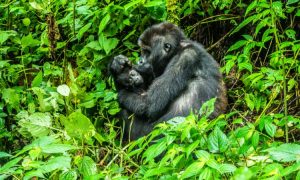
Mt Gahinga and Mt Muhabura lie on the Uganda-Rwanda border, and Mt Sabinyo on the Uganda, Rwanda, and Democratic Republic of Congo borders, hence making these dormant volcanoes international. It’s the second habitat of mountain gorillas.
9. Bwindi Impenetrable National Park.
It is located in the Kanungu District of southwestern Uganda. The forest provides abundant roots, leaves, and fruit to sustain many of the remaining mountain gorillas, as well as various bird and butterfly species.
To protect these endangered gorilla families, the Park strictly limits visitor numbers; as a result, rangers grant only eight individuals access to each gorilla group per day. Furthermore, this official site manages all trekking activities. In addition to gorillas, you can spot other mammals inhabiting the Park, such as chimpanzees, black-and-white colobus monkeys, blue monkeys, and grey-cheeked mangabeys.
10. Kibale National Park.
Kibale National Park is in Western Uganda and covers approximately 780 square kilometres. As a forest extension of Queen Elizabeth National Park, it offers diverse habitat for a wide range of mammals. As a result, the Park has become a premier safari destination. For instance, visitors often come to see its famous population of habituated chimpanzees, red colobus monkeys, and black-and-white colobus monkeys. You can also spot buffaloes, warthogs, duikers, and bushbucks roaming throughout the forest.